Episode 333
The Land Before Time
Even baby dinosaurs can have a huge impact on animation.
In 1988, three Hollywood titans, Steven Spielberg, George Lucas, and Don Bluth, came together to create what would become one of the most emotionally devastating animated films ever made, and it is the second movie to celebrate this podcast's seventh birthday.
The Land Before Time wasn't just another dinosaur movie: it was an ambitious attempt to recapture the magic of Bambi for a new generation, complete with a mother's death scene that traumatized millions of kids and made it a cultural touchstone. Despite the cutting of over ten minutes of footage deemed too scary, the film still pulled no punches in its portrayal of loss, survival, and the harsh realities of a prehistoric world.
What makes The Land Before Time so enduring isn't just nostalgia, it's the film's willingness to treat young audiences with respect, addressing grief and fear head on.
Working with both Spielberg and Lucas wasn't exactly the dream scenario Bluth expected it to be, though, and the partnership between Amblin & Sullivan Bluth would, like the dinosaurs they depicted, quickly become extinct. Despite this, The Land Before Time remains a masterclass in emotional storytelling that still resonates nearly four decades later.
Support Verbal Diorama
Loved this episode? Here's how you can help:
⭐ Leave a 5-star review on your podcast app
💰 Join the Patreon for bonus content and early access
☕ Send a tip to support the show
📱 Share this episode with fellow film lovers
Get In Touch
I would love to hear your thoughts on The Land Before Time
- Twitter: @verbaldiorama
- Instagram: @verbaldiorama
- Facebook: @verbaldiorama
- Letterboxd: @verbaldiorama
- Email: verbaldiorama [at] gmail [dot] com
- Website: verbaldiorama.com
About Verbal Diorama
Ear Worthy 2024 Best Movie Podcast Winner | Golden Lobes 2025 Earworm Award Nominee | Ear Worthy 2025 Best Movie Podcast Nominee
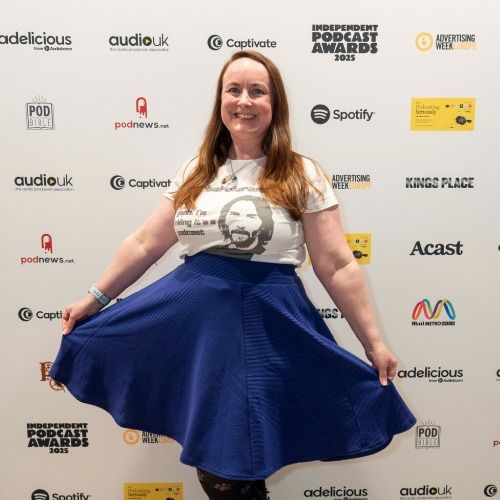
Verbal Diorama is hosted, produced, edited, researched, recorded and marketed by me, Em.
Theme Music: Verbal Diorama Theme Song
Music by Chloe Enticott - Compositions by Chloe
Lyrics by Chloe Enticott (and me!)
Production by Ellis Powell-Bevan of Ewenique Studio
Thank You to Our Patreon Supporters
Current Patrons: Simon, Laurel, Derek, Cat, Andy, Mike, Luke, Michael, Scott, Brendan, Ian, Lisa, Sam, Jack, Stuart, Nicholas, Zo, Kev, Danny, Stu, Brett, Philip M, Xenos, Sean, Ryno, Philip K, Adam, Elaine, Kyle, Aaron and Steve.
Thank you for supporting Verbal Diorama.
Mentioned in this episode:
This podcast uses the following third-party services for analysis:
Podscribe - https://podscribe.com/privacy
OP3 - https://op3.dev/privacy
Transcript
Hi, everyone, I'm Em, and welcome to verbal diorama, episode 333, the land before Time.
This is the podcast that's all about the history and legacy of movies you know, and movies you don't that's got more sequels than the Land Before Time, but only just. Welcome to Verbal Diorama. Whether you're a brand new listener, whether you're a regular returning listener, thank you for being here.
Thank you for choosing to listen to this podcast. I am so happy to have you here for the history and legacy of the Land Before Time.
Huge thank you to everyone listening to this podcast, but especially those who have continued to listen to and support this podcast. Especially now, because this is the second of three special episodes celebrating this podcast's birthday.
AE, a little known movie from:And over the years, I've returned to Don a couple more times for the Secret of NIMH and Anastasia. And Don Bluth just has this ability to just transform me and take me back to my childhood.
I used to watch Don Bluth movies on repeat when I was a kid, along with the Disney movies that I used to watch. So really, animation has been the very foundation of my being. I love animation. I still treasure it so much.
It's why this podcast started with animation with Titan A and why animation continues to feature so prevalently. Because we are now in the sixth annual animation season.
So there have been five animation seasons before this, but this season we've had Monsters, Inc. K, Pop, Demon Hunters, Paprika, Teenage Mutant Ninja Turtles, Mutant Mayhem, the Princess and the Frog, and most recently, an American Tail. And I genuinely want to celebrate animation in all of its forms. Animation is not just for children.
Yes, there are movies that are very definitely aimed at children, and I think you could argue that the Land Before Time is very definitely aimed at children. But animation is also not a genre. Animation is capable of depicting anything. There are none of the limitations of live action cinema.
And that's why animation season remains so important to me and to this podcast. And that's why I love to do this every January and February. But I especially love it because the birthday episodes always fall in animation season.
So I always get to spend the birthday of this podcast talking about incredible animated movies, of which the Land Before Time is one of.
And the Land Before Time has more sequels than Mission Impossible, the Fast and the Furious, Transformers, Batman X Men, Star Wars, Harry Potter, the Nightmare on Elm street series. And I did. That goes some way to prove how popular the franchise is.
But the original is very different to the sequels that came afterwards and was almost a lot more traumatic than it ended up being. Here's the trailer for the Land Before Time.
Em:An orphaned Apatosaurus named Littlefoot sets off in search of the legendary Great Valley with some other young dinosaurs. Cera, the Triceratops, Petrie, the Pteranodon, Ducky, the Sauronophus, and Spike, the Stegosaurus, when they become separated from their parents.
With their home becoming barren, the Great Valley is meant to be a land of lush vegetation where the dinosaurs can thrive and live in peace.
Along the way, Littlefoot is guided by the spirit of his deceased mother as they encounter several obstacles, struggle with their learned prejudices against each other, and are stalked by the evil Tyrannosaurus rex that killed her. Let's run through the cast.
We have Pat Hingle as the narrator, Helen Shaver as Littlefoot's mother, Gabriel Damon as Littlefoot, Candy Hutson as Cera Judith Barsi as Ducky and Will Ryan as Petrie. The Land Before Time has a screenplay by Stu Krieger, story by Judy Freudberg and Tony Geiss, and was directed by Don Bluth. So who is Don Bluth?
worked at Walt Disney between: on the Sword in the Stone in: September:But he didn't leave alone the departure of animators Don Bluth, Gary Goldman and John Pomeroy, along with a further four animators and four assistant animators represented about 17% of the studio's animation staff. The loss was so significant to Disney that it delayed the release of the Fox and the Hound by six months.
Bluth left Disney and started Don Bluth Productions and he was passionate about reviving the classical animation style Disney had used on its Golden Age classics. And the cost cutting measures of the 60s and 70s left Bluth feeling concerned for Disney's future.
He felt they could no longer be creative, that there was too much bureaucracy, that artistic value was reduced and with no scope to grow, they had no choice but to leave and set up on their own. Their first feature length animated movie was an adaptation of Mrs. Frisby and the rats at NIMH, which became The Secret of NIMH.
That's episode 76 of this podcast and it represented the sort of animated movies that would become blue trademarks, often dark, a little scary and nightmare fuel for our childhoods.
ions filing for bankruptcy in:And this was when a collaboration with Steven Spielberg and Amblin Entertainment led to An American Tail, which is the subject of the previous episode. And it was during production of An American Tail, the talk began of another collaboration between Don Bluth and Steven Spielberg.
Spielberg was keen to do something with dinosaurs. Of course, this was years before Jurassic park, and it was thought that dinosaurs would naturally be of interest to children.
They took inspiration from a sequence in Disney's classical music epic Fantasia called the Rite of spring, a 22 minute portion of the movie set to Igor Stravinsky's ballet, which shows the Big Bang. Single cell organisms that evolve into sea creatures that become fish, that become amphibians, that become dinosaurs.
It ends with the dinosaurs struggling to find food and then all of them dying. Spielberg envisioned his dinosaur animated story being similar with little to no dialogue. But he also wanted it to appeal to young children.
And a wordless dinosaur movie was unlikely to attract kids. So they decided to make the dinosaurs youngsters, freshly hatched, five different species with a Tyrannosaurus rex as the villain.
They originally wanted this movie soft and gentle. They would really get either of those things.
They enlisted the same team of writers from An American Tail, Julie Freudberg and Tony Geiss, to write their soft and gentle dinosaur story. Spielberg wanted it to be like Bambi, and he mentioned it to his longtime friend George Lucas, and Lucas happily joined as an executive producer.
The only other time Spielberg and Lucas worked together the wasn't on the Indiana Jones franchise.
Now, I mentioned last episode that Don Bluth found it tricky to navigate decision making between three parties on An American Tail; Himself, Amblin and Universal. And this time around he would have George Lucas in the mix too.
al screening in London in May:Spielberg too wasn't easily contactable as he was in Spain filming Indiana Jones and the Last Crusade. So it added extra difficulty to decision making on this movie. Freudberg and Geiss's original draft was seen as too juvenile.
And so Stu Krieger was brought in to revise their draft.
And since the script had to be approved by four individuals in different locations, sections of script were approved at one time rather that as a whole, something that Disney used to do in the old days when segments were developed independently of the finished script. At the same time, Bluth and his storyboard artist Larry Letter were working on the storyboards as they went along.
But it was slow progress, as not only were they having to approve section by section of the script at a time, they were also mindful that the greenlight hadn't been given for their new dinosaur movie yet because An American Tail still hadn't been released. And there was always a chance an American tail could flop.
During these storyboard sessions, Bluth came up with the idea that these young dinosaurs are taught from birth not to associate with other species of dinosaur, that each type is prejudiced against other types to show biases we aren't born with. Then if our parents and families are prejudiced, children learn those prejudices.
It would also give the movie its joy in pretending and that all these dinosaurs overcome their prejudices by working together and they learn to accept and care for each other. And they thought this would be a great message for children.
The team undertook extensive research, visiting the natural history museums in New York, Chicago, Los Angeles, and the Smithsonian institute in Washington D.C. they studied skeletons, fossils and paleo art from the turn of the century to help create a credible landscape and animals and help animators create authentic movement.
To do that, they used live action footage of elephants and giraffes to model the dinosaurs walking motions, which is why the dinosaurs have distinct mammalian behaviors. As Stu Krieger continued writing the script with these new ideas, concept art was being created based on the Fantasia sequence.
But they still don't have the go ahead. And all the while, Bluth knew they were running out of time. Spielberg was time limited and committed to another movie the following autumn.
re Time Forgot in late summer:And unlike an American Tail, which Steven Spielberg had insisted could only be made in America because it was an American Tail, this time around, the majority of the work was done in Ireland.
on eventually began in spring: ds of local animators. And by:Bluth's desire to make a more dramatic, realistic dinosaur movie was very much at odds with Spielberg and Lucas. Ideas for a cute, fun, colorful dinosaur movie. They wanted less Fantasia, more kiddie dinosaurs.
And this would mean Don Bluth would be continually frustrated throughout the process. Searching for the cast would be similarly frustrating. Many actors were hired and let go.
The character of Sarah was originally voiced as a boy, and mid animation it was agreed she would be a female character instead. And Candy Hudson was hired. All of the child characters were voiced by children, except for Petrie.
Because Will Ryan was in his late 30s when he won the role, he also starred in An American Tale as Digit. It was Max Spielberg, Steven Spielberg's young son, who suggested they hire the voice of Digit for Petrie.
Petrie was originally going to be a much bigger character until Ducky upstaged him.
Duckie was voiced by Judith Barsi, a precocious talent who enchanted Don Bluth so much he also lined her up for his next project, All Dogs Go to Heaven, which is the next episode in this series. Barsi's story is one of the most tragic of Hollywood stories.
So trigger warning for the next section because I'm going to be briefly talking about Judith Barsi's tragic death at the hands of her abusive father. Judith Barsi, like many child actors, was providing for her family at a young age.
But by:But all was not well at home.
Despite her earnings and career successes, her father Joszef's alcoholism worsened and he started verbally and physically abusing both Judith and her mother, Maria. Maria would report him to the police, but would end up dropping the charges.
His threats continued, though, with Judith starting to suffer extreme physical and emotional abuse and her agent took her to a child psychologist who reported her findings to Child Protective Services. Maria promised the caseworker that she was divorcing her husband and planned to move away with Judith. But she hesitated leaving.
th July:Both the Land Before Time and All Dogs Go to Heather were released posthumously with the closing credits Song of All Dogs Go to Heaven dedicated to Judith.
So if you're not sad enough about this movie and its contents, there's some more fuel moving on to something slightly more upbeat, if it's at all possible. Don Bluth always tended to cast one person in particular in pretty much all of his movies and that was Dom DeLuise.
The reason the cast doesn't include regular collaborator Dom DeLuise as some wacky random character is simply because DeLuise chose to take a role in Disney's Oliver and Company instead. The movie that went up against this one at the cinema. He played Fagan in that movie.
ing, the one in London in May:It was for producers only, and they were about halfway complete with the movie at the time.
George Lucas was in London and went to the screening to see if production was on the right track, but he felt things were missing with the characters and their personalities.
Don Bluth, Gary Goldman and John Pomeroy ended up having a two day marathon story session where they made major structural changes, taking all the raw material and everything they'd done up to that point and reforming it without taking anything away from the original story writers Judy Freudberg and Tony Geiss or script writer Stu Krieger. Pomeroy claimed that 80% of the story came from that story meeting with George Lucas.
The one idea that remained following that discussion was the death of Littlefoot's mother and that they needed to eliminate the parent to have the child go through a traumatic rite of passage. Psychologists were consulted about the scene and shown the film, and they gave their professional opinions of how the sequence could be depicted.
But obviously it is quite a traumatic sequence because his mother is essentially brutalized and killed by a Tyrannosaurus rex.
The original version of this scene was apparently a lot more violent, but that wasn't the only thing that was heavily edited, because much of the attack from the T Rex against the baby dinosaurs was also edited from the original footage, as well as scenes showing the dinosaurs in distress were taken out completely, with around 10 minutes in total removed. Steven Spielberg and George Lucas apparently felt that it was too frightening and could even cause some psychological damage in very young children.
19 scenes were cut, including scenes portraying the children in mild peril. And in addition, the children's screams were replaced with milder noises.
Whatever a milder noise is, over $1 million of footage was left on the cutting room floor by the end of the session. Some of these cutscenes appeared in trailers and ads before release, and some appeared in book adaptations.
But most of these deleted scenes appear to have been destroyed, although some have surfaced on the Internet in recent years as cells and storyboard drawings. Dodd Bluth fought for the extra footage to remain in the movie despite its darker tone, but finally had to give in.
And this is why the final running time is only 69 minutes, one of the shorter animated features. Even when the editing was finished, Spielberg was reportedly still unhappy and remixed the music and sound effects himself.
cause in his personal blog in:Stout claims he met with Warner Bros. Where it was agreed they would adapt his story and Stout set about writing a script. He even started designing characters and painting key scenes.
They were making progress when he alleges that Jim Henson found out about the Spielberg and Lucas produced the Land Before Time and with that movie claiming to be coming out first, Warner Brothers killed the Muppet Dinosaur version.
was apparently resurrected in: e Little Blue Brontosaurus in:He also claims Bluth lifted the story and art style wholesale for the Land Before Time, but because of the might of Spielberg and Lucas, Stout would have no option to file a lawsuit for copyright lest he be blacklisted from Hollywood. He also alleges a friend saw a copy of his book the Little Blue Brontosaurus on Kathleen Kennedy's desk.
s president of Lucasfilm from:She's also credited as a co executive producer on the Land Before Time. It could be a coincidence, but it could also not be. The little blue brontosaurus designs do look remarkably similar to Littlefoot's eventual design.
It's time to segue into the obligatory Keanu reference of this episode and if you don't know what that is, it's where I try and link every movie that I feature with Keanu Reeves for no reason other than he is the best of men.
Now, just like last episode it's very difficult to link Keanu Reeves to any Don Bluth animated movie, but I did find that he produced, narrated and interviewed filmmakers for a documentary called Side by Side, which included interviewing George Lucas.
Sometimes the easiest way I can link him to the Land Before Time via George Lucas because I'm pretty certain Keanu Reeves has never played a dinosaur, just like on An American Tale. James Horner would return to do the score for the Land Before Time, performed by the London Symphony Orchestra and the choir of King's College.
The but unlike An American Tale, the Land Before Time would have no songs in it except for one in the end credits if We Hold On Together, written by Horner and Will Jennings and sung by Diana Ross.
Now it shouldn't Oliver and Company a little bit earlier and Disney were not happy that An American Tail had surpassed Basil the Great Mouse Detective, and they actively went all out to get their movie, Oliver Co. Beating the land Before Time they wanted to assure their dominance of the animation market.
Sears, who'd partnered with Amblin for the Land Before Time, were nabbed by Disney this time around to market Oliver and Company, so the Land Before Time had their own deal with JC Penneys. Universal also heavily promoted the Land Before Time on TV with ads during Saturday morning cartoons and magazine ads in Parents magazine.
November:The same day theatrical release is a tactic that Disney would use regularly over the years in an attempt to bury Bluth's releases. The Lamb Before Time opened first the domestic weekly box office with Oliver Co. Fourth.
This was the same week as Scrooge, which was on this podcast since Christmas. The Land Before Time would drop to second in its second week, but still above Oliver. It dropped below Oliver Co.
In its fourth week and would stay in the top 10 for seven weeks.
The land Before Time broke the record for the highest grossing animated film on its opening weekend and ended up grossing $48.5 million domestically and $36 million internationally for a total worldwide gross of $84.5 million compared to Oliver Company's worldwide gross of $121 million. They may have won the battle of an American Tail vs. Basil the Great Mouse Detective, but this one went to Disney.
Oliver and Company would mark a turnaround at Disney with the studio recommitting to animation and promising one new animated feature every year and just to prove how serious Disney were about beating Bluth no matter what.
Disney president Michael Eisner allegedly said he was willing to leave Oliver and Company in theaters through the summer if it meant getting a bigger total than the Land Before Time and An American Tail.
But if you factor in the VHS market, the Land Before Time wins by a landslide, and it surpassed An American Tail domestically, so it was a personal victory for Bluth and his team.
The Land before time has a 65% rating of rotten Tomatoes, with the consensus Beautifully animated and genuinely endearing, the Land Before Time is sure to please dino obsessed tykes, even if it's a little too cutesy for older viewers. Overall, critics questioned whether dinosaurs could be cute, but found it to be an emotionally rich story and beautifully animated.
o be released Direct to video: e Time of the Great Giving in: The Secret of Saurus Rock in: Journey to Big Water in: he Great Day of the Flyers in: etwork for one series between: fore Time. Bluth would say in:Goldman would say it was dumbed down for four to seven year olds, and all the good stuff had been cut, despite needing those cuts to be as successful as it was. But he found the cut material to be artistically beautiful.
Pomeroy would say the movie never lived up to his expectations because it was the ideal opportunity to show these five creatures with different personalities working together, but that never got a chance to truly demonstrate the richness of the original characters.
But then he added, quote, what's strange is that what an artist considers an artistic disappointment will be considered the greatest thing ever achieved by the layman.
I walked into a friend's house who's got five kids, and they're gathered around their TV set and they're on their third showing of the Land Before Time that day. They've got all the dialogue memorized.
I see those five kids glued to that tv and I have to scratch my head and say, well, maybe there was something there that was worthwhile. And that's the thing when I say animation is not just for kids. It's true, but it can also be just for kids. And that's okay too.
This is a gorgeously animated movie that is definitely more aimed at children, but also has some frightening moments. And just like last episode, I cried at the end when little Foot reunites with his grandparents, because how can you not?
But I am curious, how distressing were the cutscenes?
I guess we'll never truly know, but I for one would probably quite like to see the movie how Bluth, Goldman and Pomeroy originally intended it to be, if anything, because the three men seem quite disappointed with how it turned out, as if the involvement of Spielberg and Lucas was just too many cooks spoiling their dinosaur flavored broth.
animated dinosaur movie with:Despite partnering with Amblin, giving Sullivan Bluth their two biggest hits, the partnership wouldn't last. Spielberg would instead create Ambulation. Unlike the very dinosaurs they had created together, the partnership would become extinct.
Feivel had found his family in America and livelihood, had been reunited with his grandparents in the Great Valley. There would be no third collaboration.
Instead, Sullivan Bluth had lined up a new deal with independent British producers Goldcrest Films with a new three picture deal, giving Bluth the total creative control he so desperately craved. On An American Tale and the Land Before Time, away from the Hollywood system and they were free to create the next and final movie.
In these special birthday episodes, all dogs go to Heaven, where they finally wanted to show what they could achieve on their own. Thank you for listening.
As always, I would love to hear your thoughts on the Land Before Time and thank you for your continued support of this podcast. Genuine heartfelt thanks for listening to this podcast. Whether it's your first episode or or your 333rd.
If you want to show your support in multiple different ways, you could leave a rating or review wherever you found this podcast. You could tell your friends and family about this podcast or you can find me and follow me on social media and you can share the podcast that way.
I am at Verbal Diorama. You can share posts like posts, comment on posts.
It all helps really to get the word out there and hopefully get other people to know this podcast and know what I've been doing. I genuinely love doing this podcast and anything you could do to help would be so appreciated.
A huge thank you to the amazing patrons of this podcast.
To Simon, Laurel, Derek, Kat, Andy, Mike, Luke, Michael, Scott, Brendan, Ian, Lisa, Sam, Jack, Dave, Stuart, Nicholas, so Kev, Danny, Stew, Brett, Philip M. Xenos, Sean, Rhino, Philip K, Adam, Elaine, Kyle, Aaron, and Steve.
If you want to get in touch, you can email verbaldioramail.com you can also go to the website verbaldiorama.com and you can fill out the contact form. You can say hello, you can give feedback or you can give suggestions. I would genuinely love to hear from you.
You can also DM me on social media as well. I really love to hear from people and I always try to respond as quickly as possible. I'm hugely grateful to you all for your support. And finally.
Em:Bye.